Commute
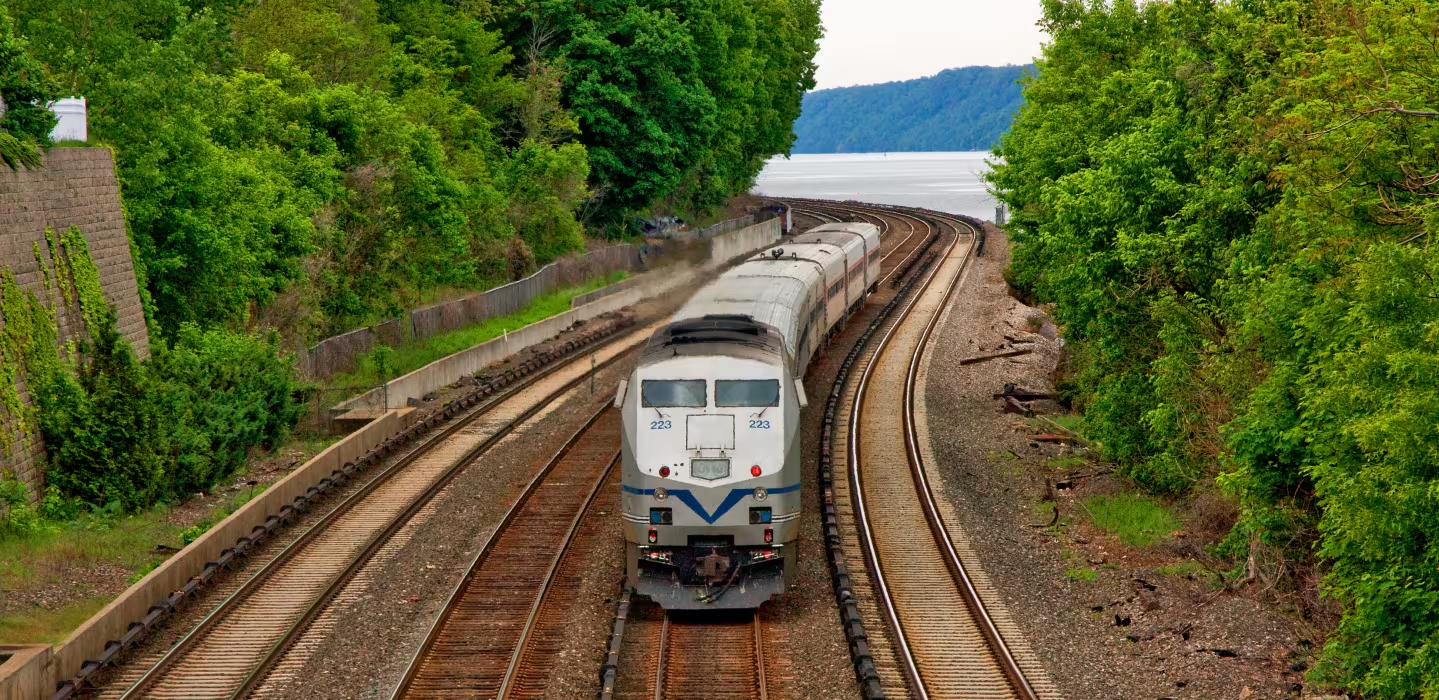
Compare rail access, station location, drive time, transfer patterns, and how frequently you actually expect to travel into the city.
NYC → Westchester
Moving from New York City to Westchester changes more than your address. Commute, taxes, property type, space, walkability, maintenance, and day-to-day routines all shift from one community to the next.
Efrain Reyes helps buyers compare Westchester communities against the criteria that actually matter to them, so the decision is based on their priorities rather than a generic list of “best towns.”
The Decision Framework
A community that works well for one buyer may be completely wrong for another. The more useful question is not “Which Westchester town is best?” It is “Which communities fit the way I need to live?”
Efrain helps buyers narrow the search by comparing the factors that materially change from place to place, including commute, housing stock, taxes, inventory, property size, walkability, maintenance, and access to the destinations that matter most.
What Changes When You Leave the City
Looking at the right variables early helps prevent a search from becoming a collection of attractive listings with no clear decision framework.
Compare rail access, station location, drive time, transfer patterns, and how frequently you actually expect to travel into the city.
Single-family homes, condos, co-ops, townhouses, multifamily properties, and different architectural styles create very different ownership experiences.
Purchase price alone does not tell you what a property will cost to own. Taxes, maintenance, common charges, utilities, and financing all matter.
Some buyers want village access and the ability to walk to restaurants, shops, or rail. Others are comfortable trading that for more property or privacy.
More square footage, outdoor space, parking, storage, and lot size can change both the benefits and the maintenance responsibilities of the move.
The same budget can produce very different choices depending on the municipality, property type, condition, taxes, and current inventory.
Communities Buyers Often Compare
These are not rankings. They are examples of how buyers can begin organizing the search around objective differences in location, housing, transportation, inventory, and built environment.
A large and varied market with multiple housing types, different neighborhood environments, and access points into New York City.
A compact village environment where buyers often compare walkability, rail proximity, housing inventory, property type, and ownership cost.
Communities that can offer a mix of single-family, condo, co-op, and village-oriented housing options with rail access in parts of the area.
Buyers often compare larger single-family housing stock, property taxes, village access, commute logistics, and available inventory.
A larger commercial and residential center with condos, single-family homes, rail access, and a more urbanized built environment than many surrounding communities.
A market where buyers may compare co-op, condo, and single-family options, rail access, ownership costs, and proximity to surrounding communities.
Primarily residential housing stock with buyers often weighing property size, driving patterns, commute logistics, and available inventory.
A geographically varied municipality where housing, commute patterns, lot sizes, and village or station access can differ substantially by location.
Buyers often evaluate single-family inventory, property characteristics, taxes, commute logistics, and proximity to neighboring commercial areas.
How the Search Gets Narrower
Start with budget, commute, housing type, property needs, timing, and the daily routines that the move needs to support.
Narrow the geography by comparing objective differences rather than trying to search every municipality at once.
Once the location strategy is clear, assess value, condition, competition, financing, taxes, and the tradeoffs of the specific property.
Westchester Relocation Guide
The Westchester guide is designed to help NYC buyers begin organizing the move around location, housing, commute, and ownership considerations before narrowing the search.
Get the Free Westchester GuideTalk Through the Move
Call if you need to talk now, or book a consultation for a more structured conversation about your move.
Local Context + Transaction Experience
Efrain brings more than nine years in real estate, 85+ closed transactions, and more than $100M in career real estate sales volume across Westchester County and the NYC Metro.
That experience helps buyers move from broad questions about where to live into the practical work of evaluating value, competition, financing, inspections, taxes, negotiations, and the risks attached to a specific property.
Start With the Comparison
If Westchester is on your radar, start by understanding which communities, housing options, commute patterns, and ownership costs deserve a closer look.